

Hello There!
Lorem ipsum dolor sit amet, consectetur adipiscing elit,


Where material behaviour becomes engineering data.
Politem's in-house laboratory supports material development from characterisation and formulation through testing, validation and optimisation.
Testing is not simply a final checkpoint. It is how a formulation is understood, adjusted and confirmed so that a compound performs according to its application requirements.
We don't only test materials.
We engineer them with data.
Laboratory data supports decisions on polymer selection, reinforcement level, additive packages and formulation adjustments. The work follows a deliberate, repeatable loop.
Test against standard
Each property is measured against the same defined standard for comparable results.
Reconsider formulation
When a property does not meet its target, the formulation is reconsidered and adjusted.
Confirm performance
Tested again the same way. This is how performance is engineered rather than assumed.
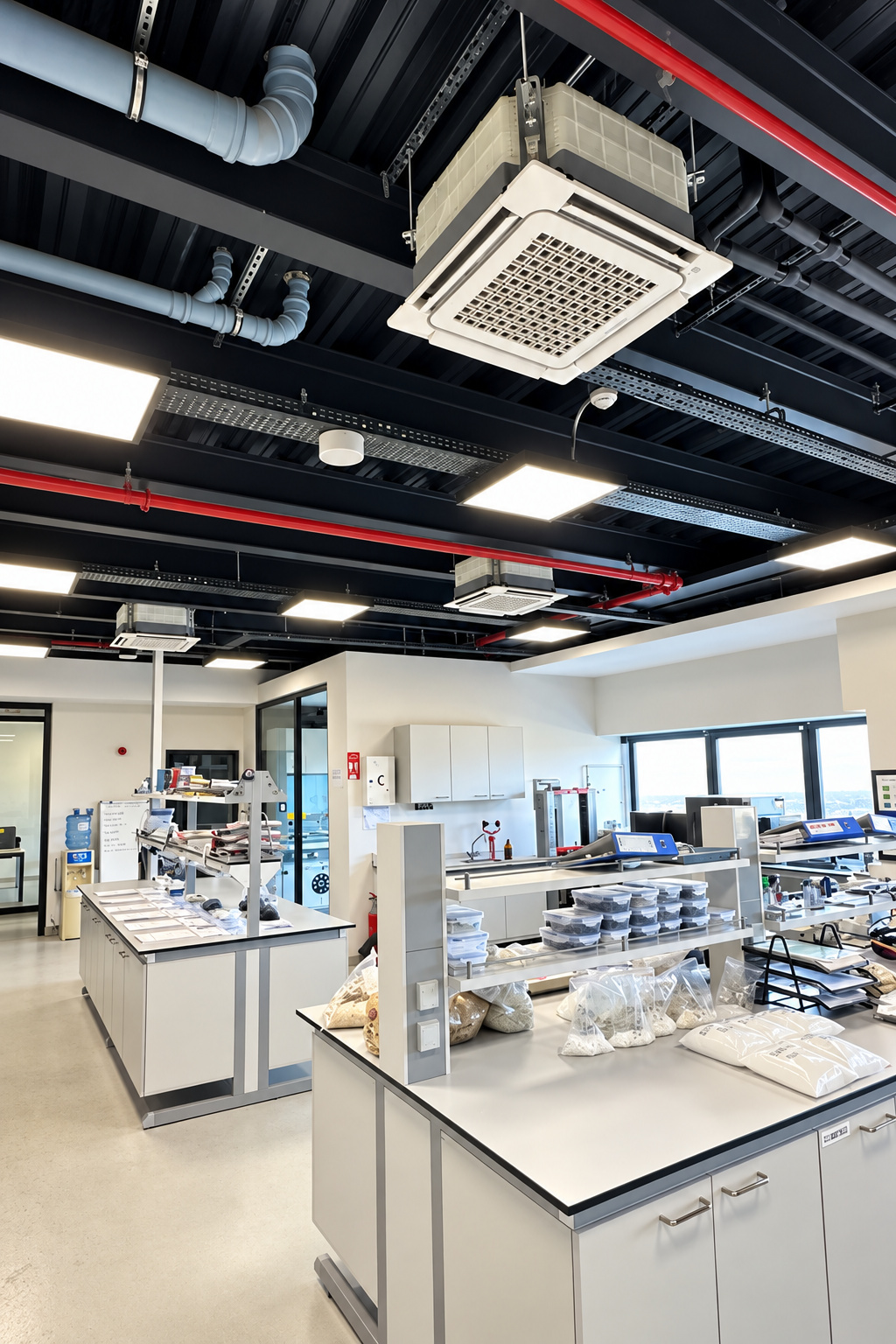
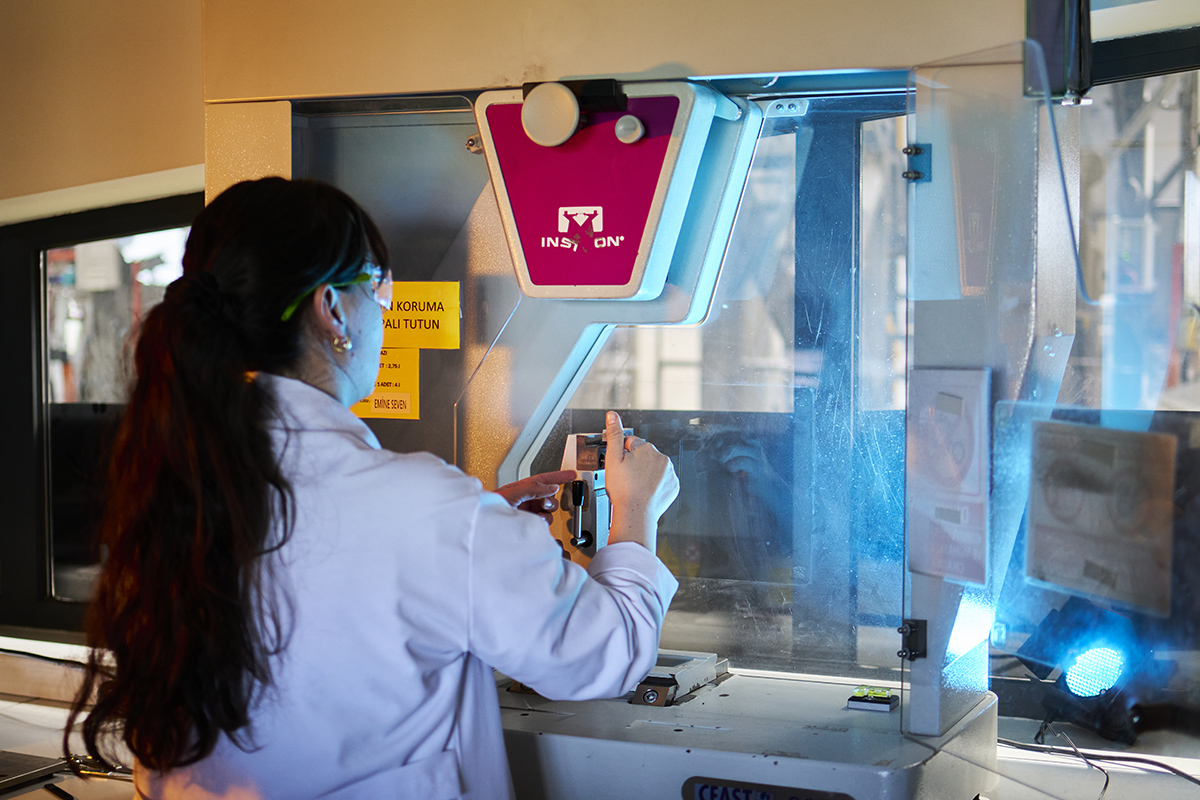
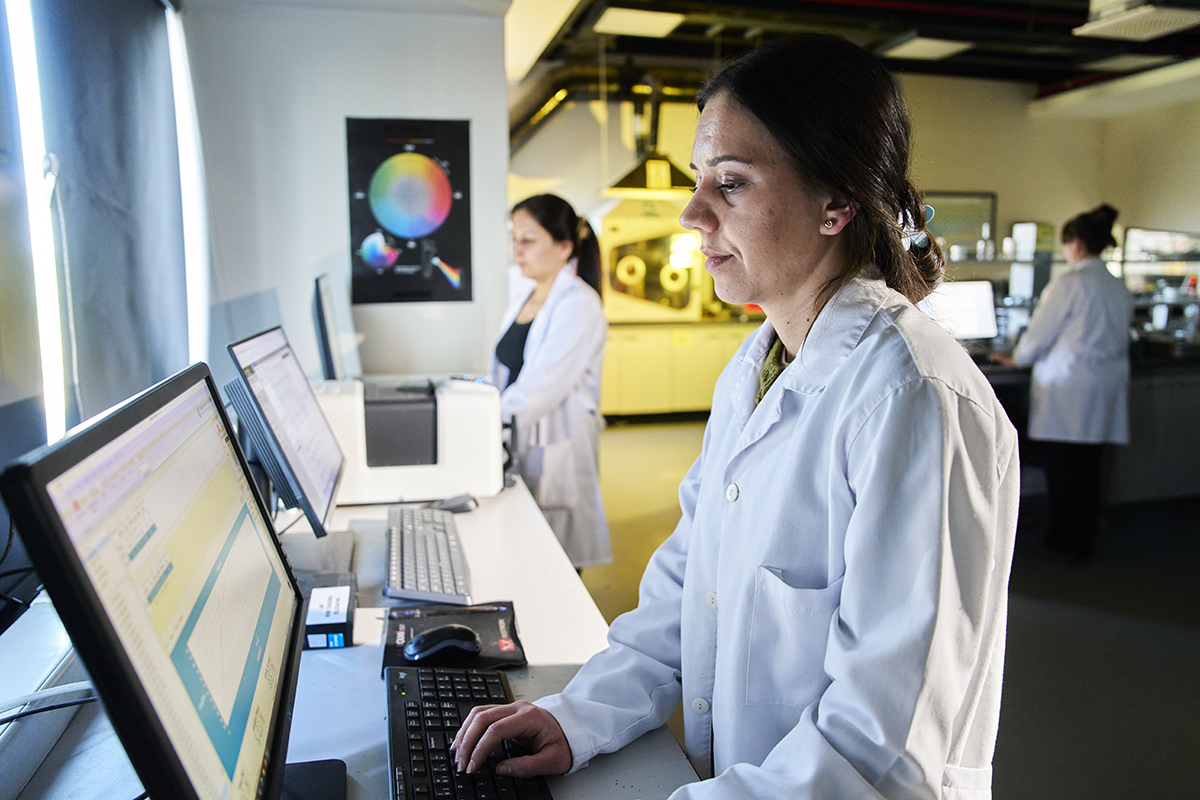
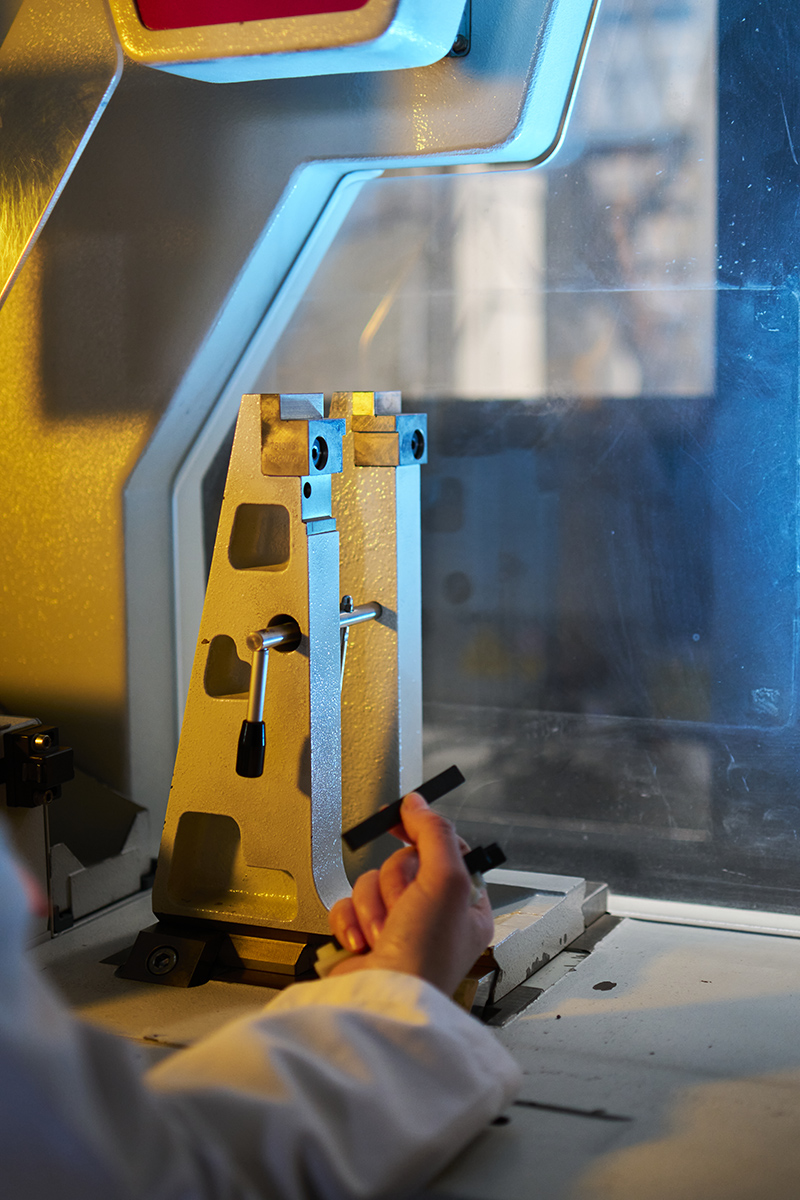
High-standard working area & instruments
Advanced analytical instruments and expert engineers delivering reliable, repeatable results.
What the lab evaluates
Six capability areas covering characterisation, mechanical, thermal, dimensional, fire and electrical-safety, colour and surface behaviour.
Understanding the material comes first.
Before a compound can be engineered, its starting behaviour has to be understood. Characterisation provides the baseline for identifying the polymer, understanding its composition, evaluating flow behaviour and monitoring consistency.
How a formulation carries load.
Strength, stiffness, toughness and hardness, and the balance between them. Testing makes these relationships measurable and supports decisions on reinforcement and impact modification.
How a material behaves with heat.
Whether a compound suits the temperatures of processing and the final application. Thermal testing helps evaluate whether a compound is suitable for the temperature conditions encountered during processing and in the final application.
Behaviour under fire and electrical-safety conditions.
In-house evaluation for demanding electrical, electronic and industrial applications. Politem performs in-house testing during material development and internal evaluation to understand how compounds behave according to the listed test methods. These capabilities do not constitute third-party certification, listing or approval.
Consistent colour and surface.
For visible applications, appearance is part of the specification. Colour and gloss measurements help evaluate visual consistency.
Data is where formulation
decisions come from.
The result is not simply a report. It is a compound developed to meet the target.
Laboratory results are used to determine what needs to change when a material has not yet reached its target. Development may focus on polymer selection, reinforcement, additive packages or processing conditions. Each adjustment responds to a measured result and is tested again against the same standard.
The right material starts
with the application.
Development begins with the requirement, not the catalogue. The laboratory helps translate these requirements into material specifications and formulation choices, and then validates those choices through testing. The objective is not the strongest material possible — it is the right material for the application.
Methods performed in-house
The following methods are performed in-house and used for material development, formulation and internal evaluation. They are testing capabilities, not third-party certifications, listings or approvals.
| Capability Area | Test | Standard | What It Helps Evaluate |
|---|---|---|---|
| Material Characterization | |||
| Material Characterization | FTIR Analysis | ASTM E1252 | Polymer identity and composition |
| Material Characterization | Density | ISO 1183 | Material identification and consistency |
| Material Characterization | Ash Content | ISO 3451 | Reinforcement and filler content |
| Material Characterization | Melt Flow Rate MFR / MVR | ISO 1133 | Flow behaviour and processability |
| Material Characterization | Relative Viscosity | ISO 307 | Molecular-weight indication for polyamides |
| Material Characterization | Water / Moisture Content | ISO 15512 | Moisture control and processing consistency |
| Mechanical Performance | |||
| Mechanical Performance | Tensile Properties | ISO 527 | Tensile strength and modulus |
| Mechanical Performance | Flexural Properties | ISO 178 | Flexural strength and stiffness |
| Mechanical Performance | Impact Strength Charpy | ISO 179 | Impact resistance and toughness |
| Mechanical Performance | Impact Strength Izod | ISO 180 | Impact resistance and toughness |
| Mechanical Performance | Shore D Hardness | ISO 868 | Surface hardness |
| Thermal & Dimensional Performance | |||
| Thermal Performance | Heat Deflection Temperature HDT | ISO 75 | Heat resistance under load |
| Thermal Performance | Vicat Softening Temperature | ISO 306 | Softening and thermal behaviour |
| Thermal Performance | Differential Scanning Calorimetry DSC | ISO 11357 | Melting, crystallisation and thermal transitions |
| Dimensional Performance | Moulding Shrinkage | ISO 294-4 | Moulding shrinkage and dimensional behaviour |
| Fire and Electrical Safety | |||
| Fire and Electrical Safety | UL 94 Flammability | UL 94 | Burning and dripping behaviour |
| Fire and Electrical Safety | Glow Wire Test | IEC 60695-2 | Response to a heated wire |
| Fire and Electrical Safety | Glow Wire Ignition Temperature GWIT | IEC 60695-2-13 | Glow-wire ignition behaviour |
| Fire and Electrical Safety | Needle Flame Test | IEC 60695-11-5 | Reaction to a small defined flame |
| Fire and Electrical Safety | Ball Pressure Test | IEC 60695-10-2 | Deformation resistance under load at temperature |
| Colour and Surface | |||
| Colour and Surface | Colour Measurement | ISO 11664 | Colour consistency and matching |
| Colour and Surface | Gloss Measurement | ISO 2813 | Surface gloss and appearance consistency |
Extended validation support for application and market requirements.
Where an application requires testing beyond Politem's in-house scope, additional analyses can be coordinated upon request through qualified external laboratories. The applicable method, specimen condition and acceptance criteria are defined according to the material, end-use application, customer specification and target market.
Share your application, target properties
and validation requirements.
Our technical team will translate requirements into material specifications and validation.